BEFORE YOU BEGIN
Three things to take away.
- Begin with the user's task and the quantity they need at one time.
- Compare the complete pack, including its closure and dispensing connection.
- Treat capacity as a starting point, then validate the selected configuration.
Start at the point of use
Imagine the pack arriving at your customer's site. Who moves it? Where is it stored? How is the product transferred into the next process? A purchasing specification becomes more useful when it answers these questions alongside the required volume.
Write a short use case before comparing products: for example, a customer needs small batches for measured dispensing, or a production line receives liquid ingredients in bulk. Record whether the pack will be emptied in one operation or opened repeatedly. This gives everyone a shared reason for choosing a format.
Build a shortlist around the opening and handling method
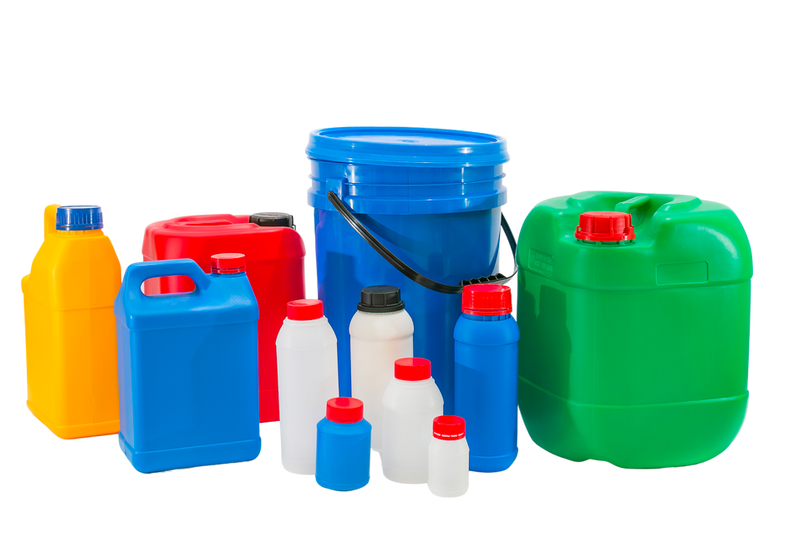
Polytainer's published portfolio offers several starting points. These descriptions help narrow a discussion; they do not establish suitability for a particular formulation or transport requirement.
- Bottles: the published HDPE range spans 100 ml to 7 L across three series. Compare the exact series, neck and closure with your filling and dispensing needs.
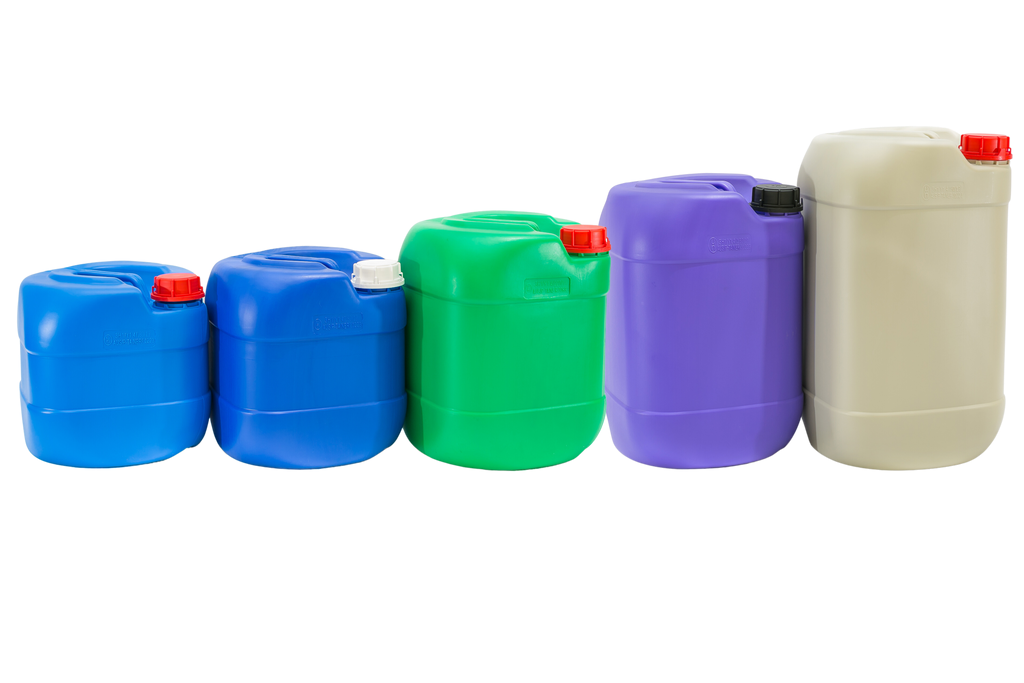
- Jerrycans: HDPE formats span 5–30 L across the EC Tainer and Polyrak® ranges, with integrated handles and stackable designs.
- Pails: 20 and 23 L polypropylene formats provide a wide opening. Consider how the product will be accessed and how the lid will be applied.
- IBCs: the published 1,000 L format combines an HDPE inner container with a galvanised steel cage. Discuss the valve, fittings and equipment used at each end of the journey.
Check what touches the product
Material names alone do not establish compatibility. Review the actual contents and conditions with the packaging supplier, including the formulation, concentration, filling temperature and expected storage period. Include caps, gaskets, liners and valves in that discussion.
SCHÜTZ's technical guidance illustrates this principle by tying packaging selection to the filling product and its intended application. It is a useful reminder to request evidence for the selected pack instead of transferring an assumption from another container.
References: [3]
Compare the whole task, then choose
Create a simple comparison sheet for two candidate formats. Record the filled pack weight, number of units handled, available storage space, dispensing equipment and any product remaining after emptying. Ask the operators who will fill and use the pack to review it.
A larger container is not automatically a better choice. A practical decision balances the customer's consumption pattern with your production and delivery setup. Take the strongest candidate into a representative trial before agreeing the final specification.
PUT IT INTO PRACTICE
Your next-step checklist.
Bring these points to your packaging discussion.
- Describe who fills, moves, opens and empties the pack.
- Confirm the required fill quantity and complete pack configuration.
- Share the product formulation and intended operating conditions.
- Check handling equipment, storage and dispensing connections.
- Agree the evidence and trial needed before approval.
Sources & further reading
References support the specific points noted above. Confirm the requirements that apply to your product, market and intended use.
- Polytainer — Products & Services (opens in a new tab)
Published container families and range information. Confirm the current specification for the selected item.
- Polytainer — 1,000 L IBC tanks (opens in a new tab)
Source for the published IBC capacity and construction; broader approval claims are not repeated here.
- SCHÜTZ — Quality management standard (opens in a new tab)
Manufacturer guidance on selection and product compatibility. This is a reference principle, not evidence of approval for a Polytainer pack.
EXPLORE THE POLYTAINER RANGE